Showing posts with label Minnesota. Show all posts

Monday, October 16, 2017

Shiver by Maggie Stiefvater


Werewolves are so not my thing. I am boring, prosaic. I like real people and realistic fiction. I was almost an entire decade behind on the Harry Potter bandwagon. I never felt the need to squeal over Twilight. Dystopian novels are not my gig. I read mid-century girl lit for fluffy, thoughtless reading. (Betty Cavanna-Anne Emery-Janet Lambert devotees unite!)

I know! I. Am. Boring. The thing is, I had a depression/anxiety problem when I was a teen. (I still have it to some extent if I don't exercise/sleep/eat right. In other words, after each and every of my four pregnancies. Postpartum OCD. I didn't know it was a thing, I thought I was just bizarre. But it is legit and turned my world upside down each time.) Reading about uncertainty and never before conceived of things to worry about was not my idea of a good time. I wanted realistic things with problems that could be solved in a mostly happy way. I didn't want sugar sweet, I just wanted some sweetness somewhere. I wanted hope. 

So the depths of dystopian and fantasy themes in today's YA genre were left unplumbed by me. Until I had to take a Young Adult Literature class last spring. I didn't have high hopes, but I figured I could slog through the book list. 

As it turns out, I may not be keen on fantasy, but I do make exception for masterfully executed fantasy. JK Rowling is a genius. I adored the Harry Potter books. But the fact that everyone said Rowling was incredible made me even more convinced that I wouldn't enjoy lesser authors attempts. 

Enter Maggie Stiefvater. 

I am not sure I would go so far as to say she is on the same level as Rowling. But I loved this book. 


There was a bit of angst. There were mystical happenings. There are inter-species longings that were a little weird. 

But they all combine in a marvelous way. Things make sense. Inter-species longings are justified. The entire werewolf thing is believable. (If werewolves living in a brick house in a Minnesota suburb is believable.)

And there is romance. Love that transcends all the weirdness. And best of all, there is hope. 

Sam is a werewolf who is more human than wolf. Grace is a 17 year old human who is really drawn to the wolves in the Minnesota woods behind her home. One wolf in particular stands out--the one with yellow colored eyes. 

As the town demands the death of all the wolves for the suspected attack of a high school student, Sam suddenly finds himself wounded on Grace's back door step in human form. Fortunately, Grace's parents are completely non-involved. She can invite him in and care for him without worrying about her parents finding a teenage boy hanging around in her room. (Despite the werewolf thingy, this was one of the most unbelievable parts.) Of course, they fall in love. There is a connection between them. But why? 

Time is limited. The cold makes Sam turn into a wolf again. And it is October in Minnesota. How long will they have together before he turns? And will he ever turn human again or is this brief time their only shot at happiness? 

Angst. Love. Werewolves. Hope. 

They are all there in glorious technicolor. 

(Of course, there are additional books in the series, if you get hooked.) 

Friday, May 27, 2016

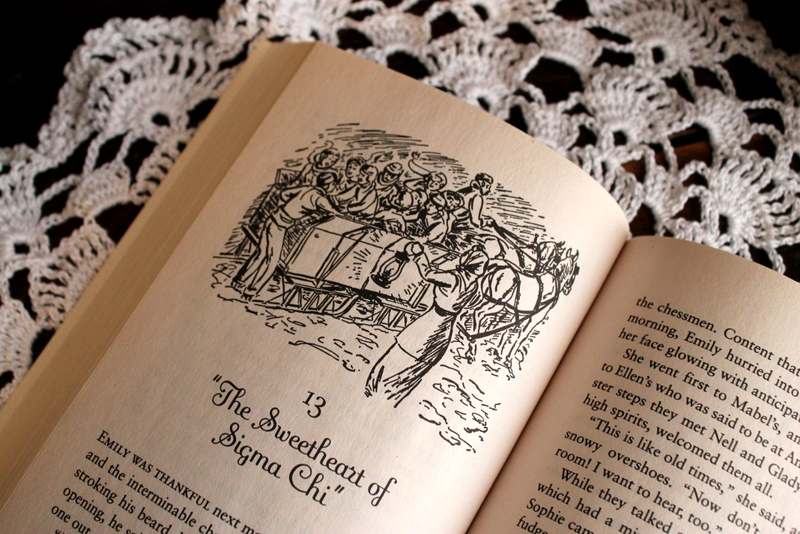
Emily of Deep Valley by Maud Hart Lovelace, Illus by Vera Neville


(I have decided I am rotten at quick synopsis of books. I go into way too much detail. So I am now going to be more concise and brief. Ha! It is just so hard when there is so much to say.)

Maud Hart Lovelace is famous for her Betsy-Tacy books, but this book, about another girl in Deep Valley is just as good. It has brief mentions of Betsy and Tacy's crowd, but really and truly, this is Emily's book. 

This is the story of an intelligent girl, stymied by graduating school and not being able to afford college. Eventually she finds useful occupation in Deep Valley and makes new friends to augment the friends away at college. 

(That was pretty brief wasn't it?)


I adore Vera Neville's girls. They are all so beautiful and elegant!


Emily lives with her grandfather, so she isn't at liberty to make plans without considering him. She doesn't have the freedom of heading off to college without a backward glance. Her grandfather is very kind and generous, but in his day, things were done differently, so he can't see the point in scrimping and saving for seeming trifles.


At the beginning of the book, her grandfather is completely consumed with plans for Decoration Day (Memorial Day) when he and his fellow Civil War veterans will march in the parade. Emily, on the other hand is busy with end of school activities. She and her grandfather are very close, but they are of completely different generations, so see the world and what is important very differently.


Graduation


The summer is a lovely mix of quietness in her slough, which Emily loves, and a whirlwind of friends and parties. When September comes, however, everyone leaves town. Emily has always loved the quietness of where they live, but suddenly, instead of quiet peacefulness, it seems oppressively empty and lonely.


Despite her best intentions, she falls into a little bit of a depression about the whole thing. For Grandfather's sake, she does her best to be cheerful and do the things that need doing.


Finally, the day before the first home football game, after a chance comment from a new coach at school about how she looked like a school girl with her hair in braids, she pulls herself together and decides she is not going the game. She isn't in high school anymore, and she is not going to languish around trying to pretend she is.

"The reason I didn't put up my hair was that I was clinging to high school," she thought. "There doesn't seem to be anything in my future, so I'm cling to the past. 
"But I can't stop living. I can't tie up my life like Chinese women do their feet. I've got to go on somehow."
"I don't know just what I can do, stuck here in Deep Valley.... But I know I'm going to do something, and I'm NOT going to go to the game this afternoon." 


 At church she hears the minister quote Shakespeare--"Muster your wits: stand in your own defense." When Emily pulls herself together, she does so quite admirably. She takes up piano lessons once again, starts a book club, takes dancing lessons, and buys a new dress.


While skating on the pond, she sees some boys treat a little Syrian immigrant she had befreinded earlier in the year very badly. She brings him home to her grandfather and feeds him up. Thus is born the idea for a Boys club for these immigrants.


Emily sets her plans in motion, and while she is still a little lonesome, she is busy and happier.


Her crowd comes home for Christmas, but somehow it isn't as joyful as Emily thought it would be. The boy she wants is obsessed with her cousin, as are all the other boys it seems. After a disastrous party, in which her cousin inveigles one of her hanger-ons to resentfully squire Emily, Emily is thankful for the quiet loneliness of her slough.

Emily realizes, "I tag them around, but I'm like a shadow. Well, I won't do it any more!" 
She wasn't tired of her friends, but she was tired of pursuing them as though her own life were worthless.


In an effort to be more on her own, Emily and her grandfather decide to give a Christmas party for some of the Syrians. As fall and winter progressed Emily had become more and more interested and involved with the immigrant community


Dancing at the New Year's Eve Party. Emily has some encouraging words from Betsy Ray about the usefulness of seemingly "wasted" years after high school.


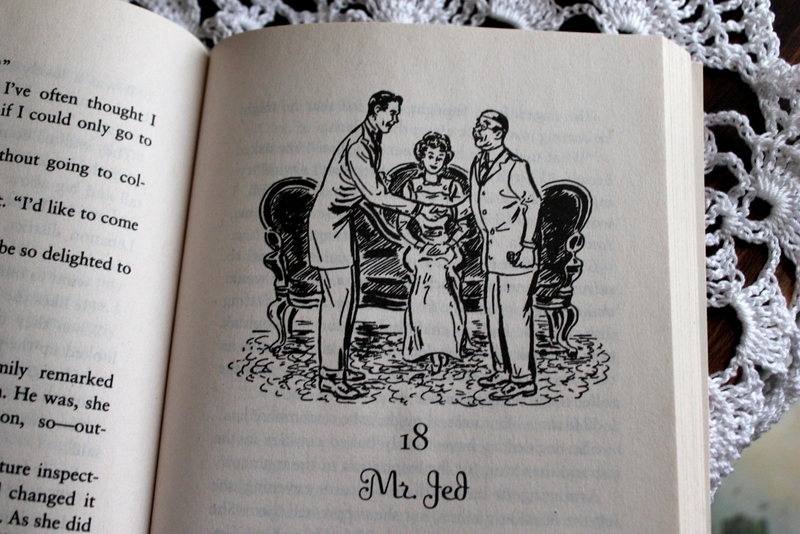
Through her work with the Syrian's, Emily becomes friends with the new coach at the school who had innocently commented on her hair looking like a high schooler's and set off all of Emily's changes, Mr. Jed. 


It is interesting to me how timeless things are. Syrian refugees and immigrants are very current subjects in our world today, as current as they were at the turn of the last century.


Jed and Emily get to be quite friendly through their involvement with the social services they create and supply to the Syrians. 


Eventually, there is a love interest of Emily's own. 

I love Emily. I love her natural responses of disappointment and dejection at not doing what she wants to do. And I love her resolution and plans to make her little world better rather than wallowing in the past or in her injustices. She becomes her own person and realizes it is possible to do so much good in the world without going about it in the prescribed manner she had in her own mind.

Tuesday, March 1, 2016

Betsy-Tacy by Maud Hart Lovelace and Lois Lenski


Betsy-Tacy are an American institution. Based closely on Maud Hart Lovelace's life, these books are a charming glimpse into turn of the century Minnesota life. While firmly connected to that particular time and place, the feelings and ideas of childhood are expressed in such a way that feels as current today as it did 70 years ago when it was written. A magical sort of book. The kind of book that several generations of American girls have loved and cherished. 

At the beginning of the book, Betsy meets Tacy. They have an immediate connection, which is strengthened and tested through hilarity, high adventure, life changes for both of them, and the every day closeness that can only happen when you live across the street from your best friend. At the very end of the book, they meet Tib, who is taken into their coterie, giving the next book the title Betsy, Tacy, and Tib

Writing a book about little girl best friends is not an original idea, but Lovelace's sense of humor and self awareness, keep the book from being tired or sweet. There is sibling rivalry, bad behavior, death, and over all of this, a deep sense of well being. As long as they had each other and their loving and secure homes, Betsy-Tacy could face the world unfearing.  


Childhood


Lois Lenski has some adorable illustrations. 


Their budding friendship


With their older sisters


One of Betsy's stories.


Learning of death and hope together.


Going calling like real ladies


Life changes


New arrivals!


The advent of Tib. I love how easily Lenski shows Tacy's shyness and the two girl's closeness and Tib's aloneness. 


Tib impresses them by standing on her head, so she is allowed to make their duo a trio. 

Tuesday, January 19, 2016

Marven of the Great North Woods by Kathryn Lasky and Illustrated by Kevin Hawkes


Mom bought this for me last year and somehow it got put in a stack of to-reads and never got read. (Well, you see, I have a lot of to-read piles. Like at least five scattered around the house. I asked Justin the other day if his teen aged self would have pictured him living with a book hoarder for a wife. He replied in the negative. But he did promise to love me for better or worse once upon a time, so I guess he is stuck with navigating around precarious to-read piles for the rest of his life. We all have trials and tribulations in this life.)

Anyway, this is a perfectly lovely story. It is based on the life of the author's father, Marven. During the great flu epidemic of 1918, Marven's parents, worried their kids would all be killed by the flu, tried to figure out a way to send at least one kid away from the city of Duluth to the safety of an isolated life. Since girls couldn't travel alone, they sent their son to an old college friend of Marven's father who operated a lumber camp in the far north of Minnesota. 

The lumber camp was full of French Canadians. 
My mum grew up in Quebec (but English), so I have a soft spot for stories about les habitants. 
(Look at me using a french phrase!) 


Marven was quick with numbers, so it was decided he could do the lumbercamp's accounts. 

Here, his mother cuts down an overcoat to fit him. There is a bit of cutting to do. 


His mother makes him latkes to eat on the way and tells him to wait until they are almost cold before eating them. "That way they can warm you twice." While Marven hurtles north on the train, he worries a little about the camp. Most of the lumberjacks would speak french and the only french he knew was Bonjour!, which wouldn't get him too far. 


This is where the train drops him. In the middle of nowhere, by himself in frigid temperatures with five miles of cross country skiing to put in before he gets to the camp.

Somehow, to this modern mother, this doesn't seem like a safer option than sticking in Duluth and taking his chances with the flu. I mean, wolves! Frostbite! Blizzards! Getting lost!

 But then, they wouldn't have been able to read Laura Ingalls Wilder yet.


Despite the odds, Marven made it with no mishap. And learns a new french word "derriere." As in "I'm like to freeze my derriere off." So now he could say "Hello, bottom." in french. 


Look at this food! 

Part of Marven's job was to get the lie-a-beds to breakfast on time. 
(Although, who wouldn't jump out of bed to eat this sort of breakfast?) 

He learns some more french, "Lève-toi!"


Getting a system sorted for the book keeping leaves Marven with time to ski through the woods. He mistakes Jean Louise, an enormous jack, for a grizzly bear and starts to cry, thinking of his family waiting at home for him. With his tears frozen on his cheeks (I am getting cold just writing this) Jean Louise worries he is homesick and they get to talking.


Jean Louise and Marven become great friends. 

I love this picture.  


Before Marven leaves, as the spring thaw sets in, Jean Louise surprises him with his very own ax. 


Jean Louise also goes to the train depot with Marven, carrying him through the slushy parts. Jean Louise is quite a great guy. 


And then a joyous reunion with his family in Duluth. "No one is dead!" 

I am glad to be living in 2016. 

Reasons I love this book
1. Lumberjacks 
2.The frozen north 
3. French Canadians
4. Gorgeous pictures